In a small apartment, a wardrobe must do more than hold plenty. It should bring order and sit quietly within the room. Bespoke cabinetry uses awkward recesses, corners and the full height to the ceiling that a standard wardrobe usually leaves untouched.
Inventory first, shelves second
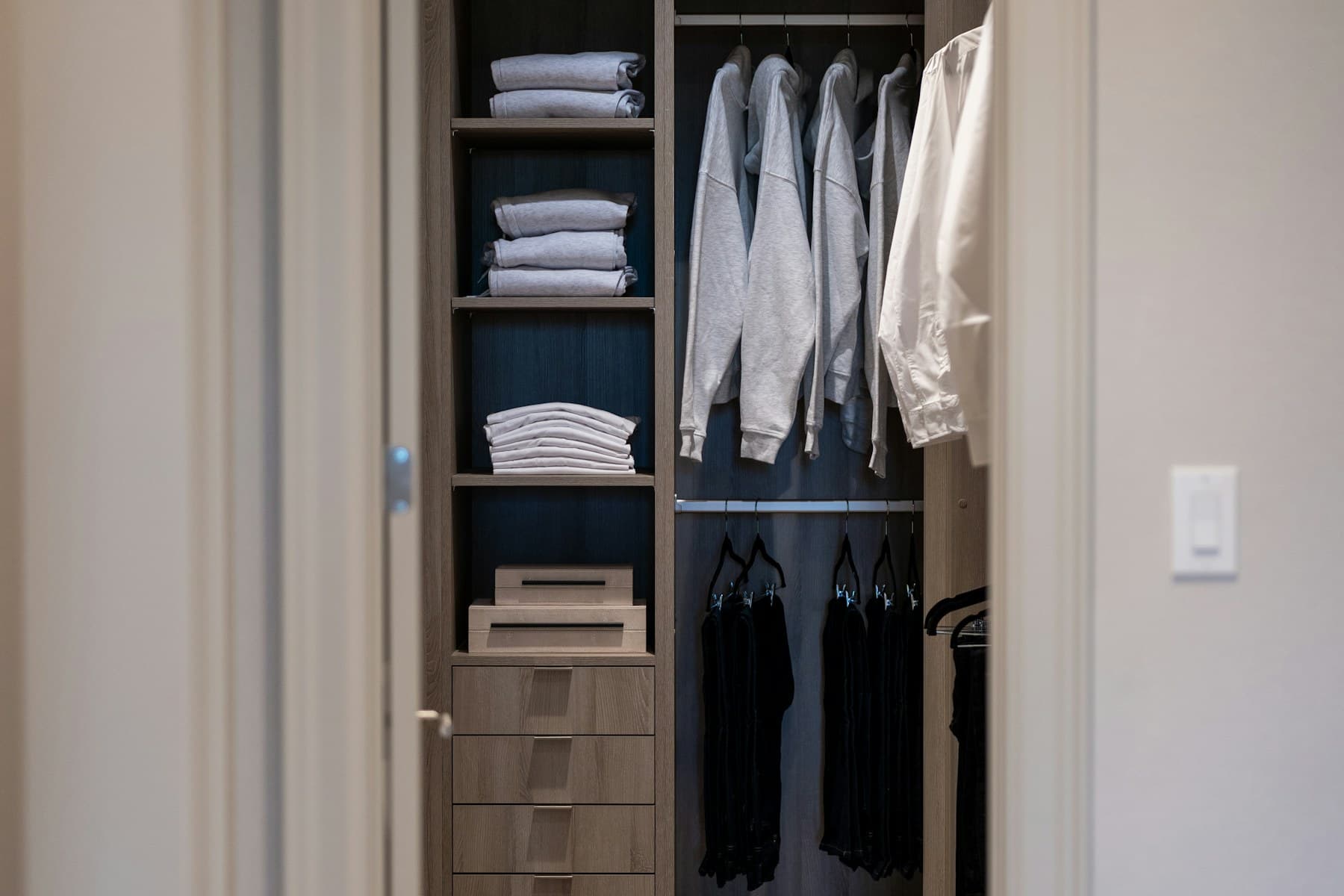
Count long and short hanging clothes, shoes, suitcases and seasonal items. Only then can the right balance of rails, drawers and shelves emerge. A well-planned wardrobe does not need many identical compartments; it needs appropriate ones.
- keep everyday items between knee and eye level
- reserve the upper zone for luggage and seasonal textiles
- choose full-extension drawers to reveal their entire contents
- leave one adjustable shelf for needs that will change
Depth matters more than width
Clothes on conventional rails generally require around 60 cm of depth, but a shallow recess can use pull-out rails mounted perpendicular to the front. Sliding doors save floor space, while hinged doors reveal more of the interior at once.
A lighter volume and considered light
Fronts close to the wall colour reduce the visual weight of tall cabinetry. A discreet shadow gap can define the vertical rhythm instead of heavy handles. Inside, neutral LED lighting activated by the doors makes colours and contents easy to see.
In a compact home, luxury is not an excess of space but the absence of everyday clutter.